Scroll
I regularly engage publics beyond academia through op-ed writing, public lectures, and media appearances. I am available to speak on a range of topics related to:
The Middle East
US higher education
Gender struggles
Protest movements
Arts and society

Lectures and Interviews
Featured
The 2011 images from Tahrir Square are indelible: hundreds of thousands of people ushering in a new political era in the Middle East. Or so it seemed. Today, true democracy in Egypt is a distant dream. Over the last decade, anthropologist Jessica Winegar has witnessed the transformations up close. One of our foremost experts on Egypt, the Northwestern University professor shares her analysis of the Arab Spring and its surprisingly personal aftermath.

This talk examines how humor in 21st-century Egypt is both a form of subversive political action and a mode of hegemonic cultural expression that reinforces certain social hierarchies.
Examples from before, during, and after the 2011 uprising demonstrate how important humor is in understanding the revolution and how it faltered.
Faculty from Northwestern University's Middle East and North African Studies (MENA) Program gathered at the Evanston Public Library on April 13, 2015, to deconstruct four myths about the Middle East. Attached are some excerpts from the presentation.
Myth #2: "The Men Oppress Their Women" - Jessica Winegar (Anthropology): (3:06)

Dr. Jessica Winegar, anthropology professor at Northwestern University, joins Good Day Chicago to talk about the resignation of Mike Polisky.
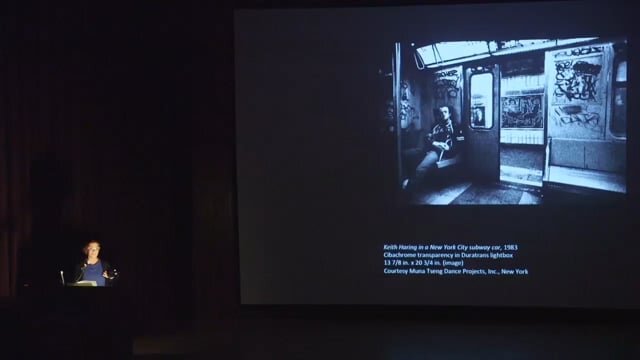
Associate Professor of Anthropology Jessica Winegar gives a slide talk for "Five Takes on Tseng Kwong Chi," the opening celebration of the exhibit "Tseng Kwong Chi - Performing for the Camera."
October 1, 2016
Block Museum of Art
Op-Eds
Full List

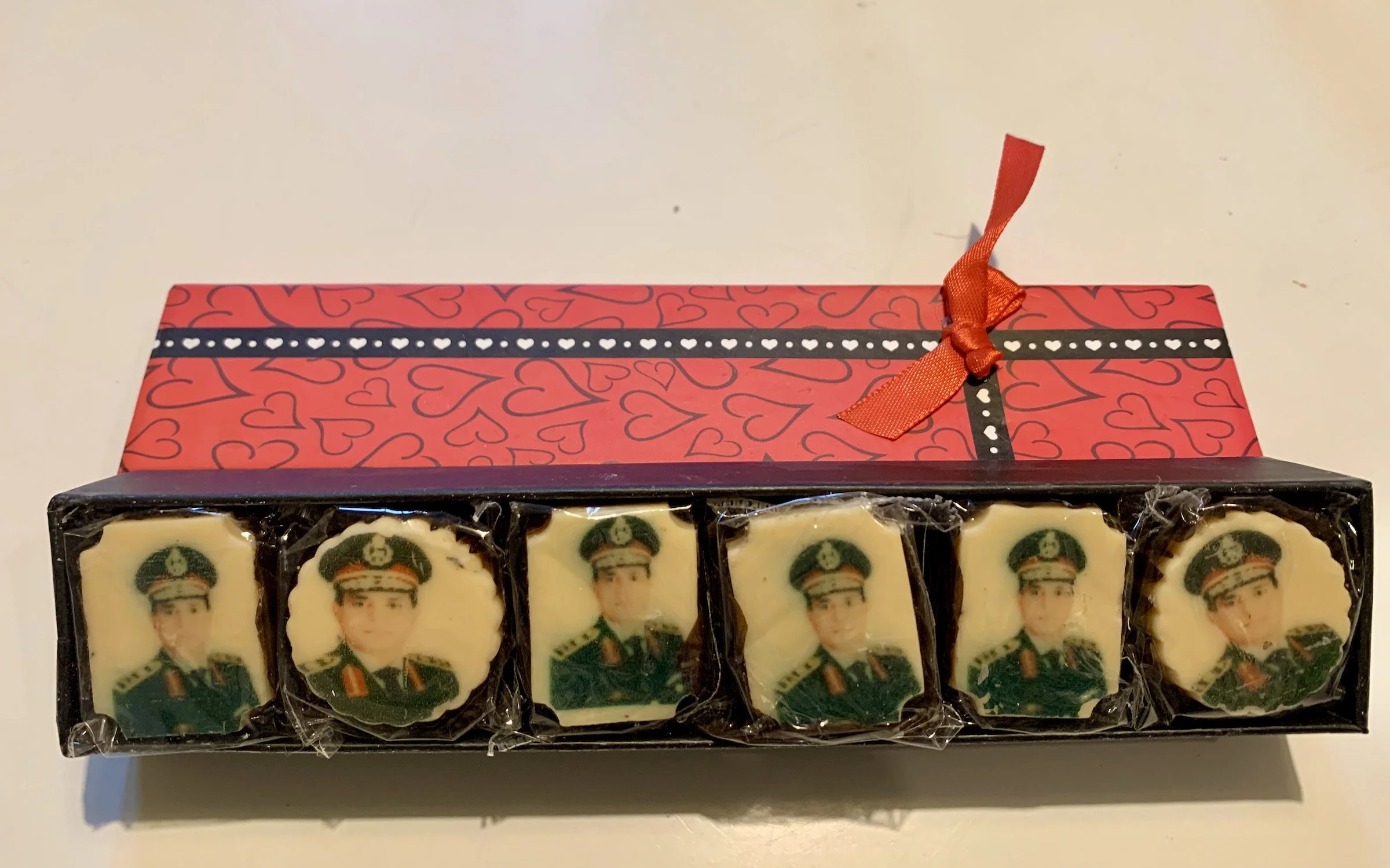
Ten years after the overthrow of authoritarian president Hosni Mubarak, Egypt faces economic downturn and continuing support for General Abd al-Fattah al-Sisi’s authoritarian regime. In this essay, Jessica Winegar explores how “the alluring aesthetics of authoritarian populism” contributed to a departure from the revolution’s demands. Drawing upon her research in Egypt, she examines why Egyptians, exhausted by the upheaval of the uprisings, called for stability (istiqrar). Winegar argues that Sisi’s authoritarian rule based on “masculine, military, and middle-class aesthetics” cultivated his image as a strongman and savior, enticing everyday citizens yearning for dignity, respect, and stability.

Six months ago, I logged into a Zoom room at the Skokie, Ill., courthouse. After 15 minutes of rote proceedings, the judge pronounced my spouse and I divorced. It was a strange but relieving end to a 21-year marriage that I had thought would last forever. I was just one of thousands of women who experienced the end of a relationship during the pandemic. I closed the computer and went back to check in on my son’s remote learning, joining multitudes of women doing the same with their children.

I am dreading the day that my young son comes home from school hurt from his first experience of anti-Muslim bigotry. We risk alienating an entire generation of our kids if schools do not work to make sure they are safe and welcomed.

I spent a large part of my 30s suffering — largely in silence — because I couldn’t seem to get pregnant. And whenever I did, I had a miscarriage. Those were also my years on the tenure track, when I was working madly to publish, perfect my teaching, and do academic service in order to achieve a decent salary, job stability, and a successful career.

Certainly there are differences among societies and regions of the world when it comes to domestic violence. But if we exoticize it we miss what is going on.

Behaviors that are considered red flags in the U.S. and Western Europe are considered normal, even desirable, in other parts of the world.

Egypt’s most important human rights nongovernmental organization recently received notification from the Egyptian authorities that it would be shut down.
Negative stories about the Middle East dominated Western news headlines in 2015. It’s easy for Americans, especially those who listen to Republican presidential candidate Donald Trump and his supporters, to get the impression that the region is just one miserable homogeneous place of violence, terror, religious fanaticism and authoritarianism.

In last week’s Republican presidential debate in Colorado, New Jersey Gov. Chris Christie garnered huge applause after a moderator’s question about whether fantasy football should be regulated like gambling. With his famed Jersey bluntness, Christie exclaimed, “Wait a second. We have 19 trillion dollars in debt. We have ISIS and Al-Qaeda attacking us. And we’re talking about fantasy football?! Can we stop?!”